
Minneapolis Resident Record Paths
No official source is an unrestricted current Minneapolis resident directory. A careful search uses the system that answers the actual question, then keeps its limits attached to the result. Hennepin parcel and land-title records, the City Address Portal, Minnesota Court Records Online, voter-registration confirmation, vital indexes, historical directories, business filings, and professional license searches all describe different relationships. A name match alone is weak. A consistent address, date of birth when lawfully public, case number, license number, or historical address can provide a second point of comparison.
| Record channel | What it can confirm | Official source | Access boundary |
|---|---|---|---|
| Property and land-title records | Parcel facts, owner information, legal description, and recorded instruments | Hennepin property search and Recorder/Registrar | An owner, grantee, trust, lender, estate, or prior owner is not proof of occupancy |
| Court case index | Case number, type, filed date, status, and court location | Minnesota Court Records Online | Remote results omit protected and some pending, older, or restricted matters |
| Registration confirmation | Whether an individual registration lookup returns a match | Minnesota Secretary of State | Status confirmation, not an unrestricted resident list |
| Vital indexes and certificates | Birth, death, or marriage information within the relevant access rule | MDH, Minnesota Historical Society, and Hennepin County | Index access and certified-copy eligibility are different |
| License or business filing | Credential, legal entity, status, city, or filing role | License Minnesota and Secretary of State | A registered-agent, business, or license address may not be a residence |
Start with the field you can identify accurately. A known address can be checked in Hennepin's property systems and the City Address Portal. A known case number belongs in MCRO. A complete name plus required identity details belongs in voter, vital, license, or business systems only when their rules permit the search.
Minneapolis Court Record Search
Minnesota Court Records Online, or MCRO, separates Case Search, Document Search, Hearing Search, and Judgment Search. Case Search offers Name, Case Number, Citation Number, and Attorney modes. In name mode, the interface exposes name type, last, first, and middle-name fields, exact date of birth or a date range, filing-date filters, case categories, case status, and court location or county. Select Hennepin in the county panel rather than assuming a statewide match is tied to Minneapolis.
| Name syntax | Try exact spelling, a trailing wildcard after at least two characters, and Sounds Like as separate searches. |
|---|---|
| Date controls | Use an exact date of birth or range only when the form exposes it and the field is lawfully known. |
| Case filters | Civil, Criminal, Family, Probate, and Mental Health categories can narrow a search. |
| Location | Use the county selection for Hennepin, then record the location with the result. |
| Negative result | Save the name syntax, county, category, date filter, and search date. No result has a limited meaning. |
The official MCRO Case Search capture shows the name-search tabs and filters.
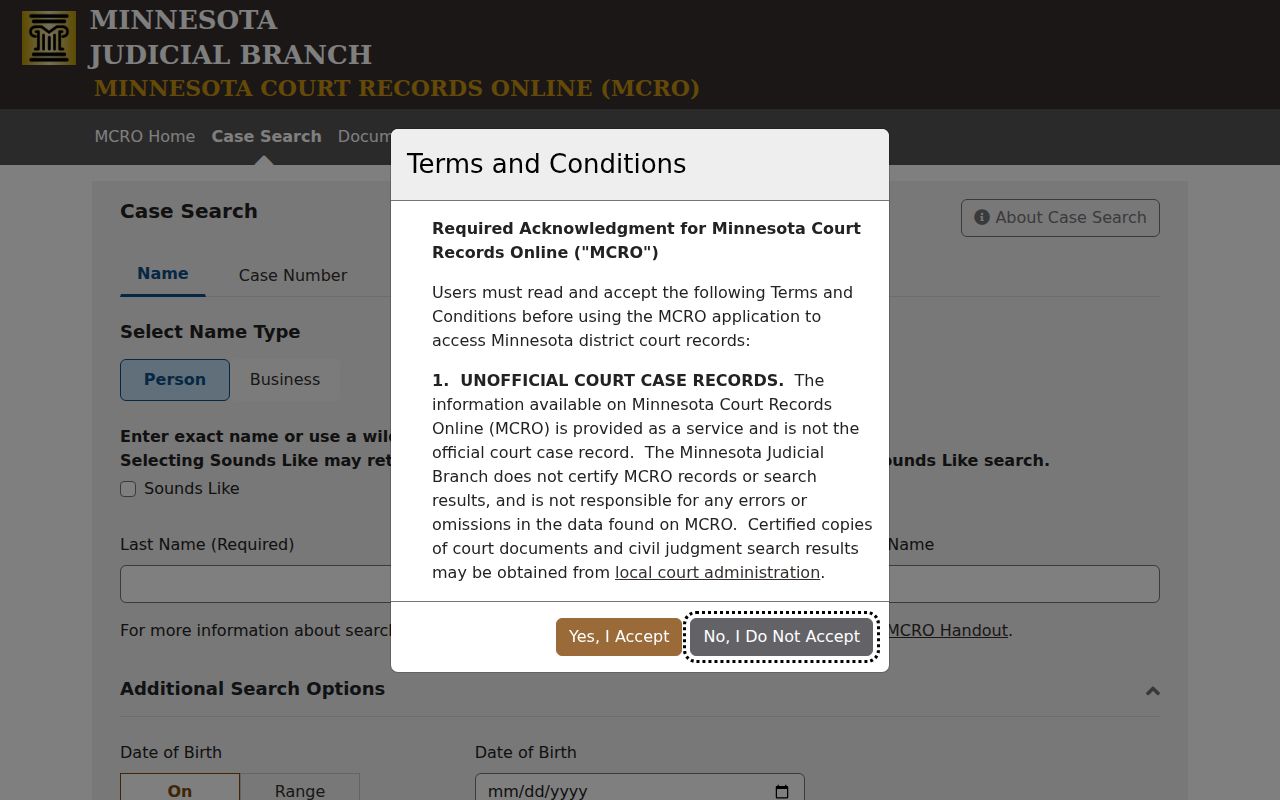
Use the result only as a court-index record. It does not identify a Minneapolis resident merely because the name is similar.
Reading Minneapolis Court Records
MCRO is not a complete criminal-name index. The court FAQ says pending criminal matters generally do not display by defendant name until conviction, and a case number, citation number, or attorney or bar search may be needed. A case can also be absent because it was expunged, destroyed under retention rules, older or not electronically available, or excluded from remote display. The system does not show some protective-order records, certain public documents, party street addresses, comments, or some pending criminal, traffic, and petty-misdemeanor name results.
The official MCRO handout identifies representative result fields, not a live Minneapolis person record. A reader may see a case number, title, type, filed date, court location, judicial officer, status, citation number, flags, related cases, party details, charges, events, document indexes, hearings, dispositions, financial information, or judgment details. A docket is the court's running record of what has been filed or happened in a case. It should be read with the case number and status, rather than used as a substitute for identity proof.
MCRO also provides a Document Search route by case number.
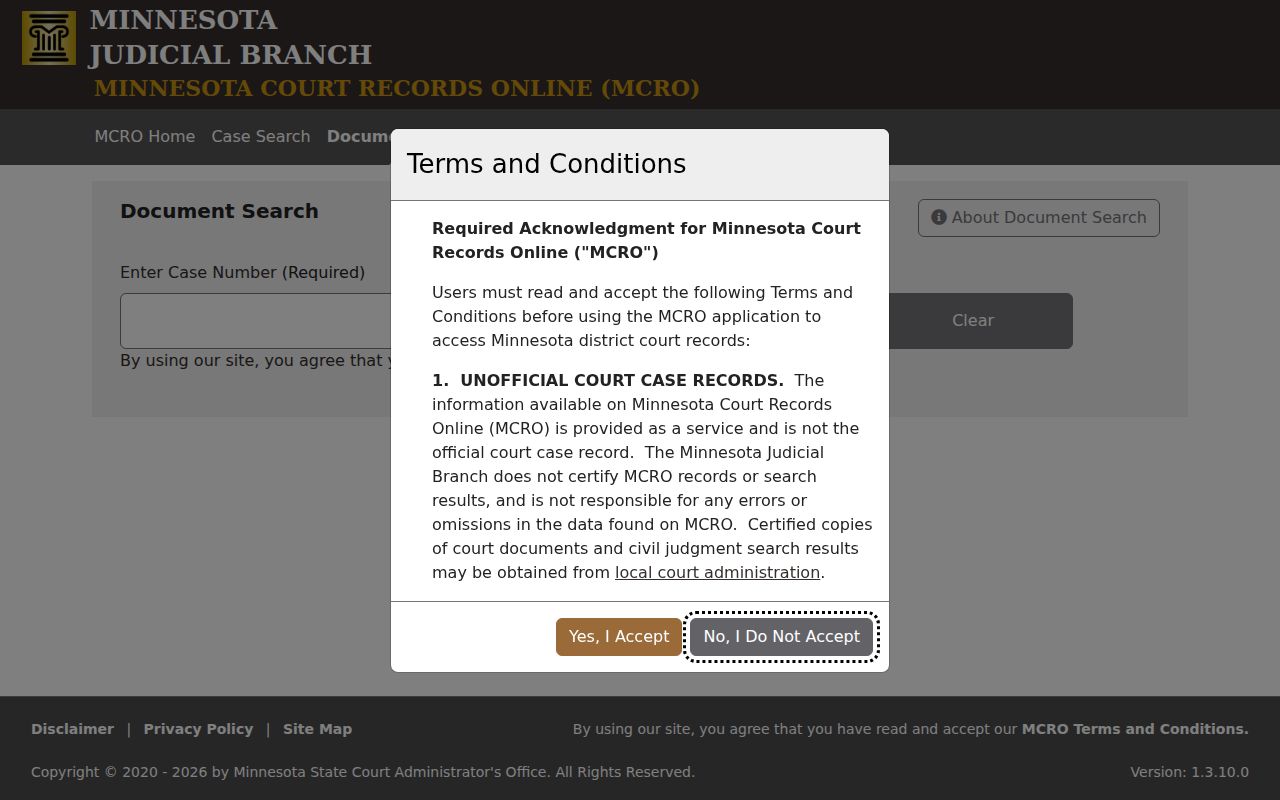
When a document or older file is needed, the court's copy channel and local records access are more appropriate than guessing from a case-search screen.
Note: MCRO sessions reset after about 30 minutes, so save the case number and the filters before leaving a result.
Verifying a Minneapolis Resident
Anchor one Minneapolis search to a specific, lawful public detail, then seek a second independent record. Hennepin's property search accepts a house number and street, a 13-digit PID, or addition information. The City Address Portal adds ward, precinct, fire, snow, garbage, and neighborhood context for an address or property ID. Neither source is a household roster. If a deed or ownership history is relevant, use the Hennepin Recorder/Registrar index and request the instrument rather than turning a property owner into a current occupant.
- Write down the exact name, spelling variants, known address or case number, the source date, and why the source may relate to the person.
- Use the purpose-built official source, such as Hennepin property information for a parcel or MCRO for a court matter, and save the scope of the result.
- Compare one independent attribute, such as a consistent historical address, case number, date or place of birth where lawfully public, or license number.
- For a historical question, check the Hennepin Library directory scan by both surname and address, then inspect nearby years and the page image.
- Request a certified copy only from the custodian when eligibility applies and a certified record is actually needed.
- Index
- A searchable finding tool that points to a record. It may omit context or restricted material.
- Image
- The scanned record or page. It can show context that a search-result summary does not display.
- Certified copy
- A copy issued by the custodian with its certification. It has separate fees and eligibility rules from a public index.
For a historical address trail, the Minneapolis city directory collections offer the library scans, their date ranges, and a way to preserve the source details.
Minneapolis Voter Record Status
The Minnesota voter lookup is a registration-status confirmation tool. It requires first and last name, date of birth month, day, and year, plus either ZIP or county mode. ZIP mode requires a ZIP and house number, then a street selection. County mode uses county and city or township choices. An apartment or unit checkbox makes the unit field required. The data update nightly, though an official change can take up to 14 days to appear and a processed registration generally appears the next day.
The lookup is not a public roster download. Under Minn. Stat. §201.091, a request for a public voter list requires identification and a signed statement agreeing to the stated permitted uses. The law restricts unrelated use, publishing a searchable online copy, and selling, lending, or surrendering the list. Hennepin directs voter-data requests through its Data Request Portal, with photo ID and Minnesota-voter status requirements. A registration address can be dated or safety-withheld, so it should not be represented as proof of current residence.
The required fields appear in this official Minnesota registration lookup capture.
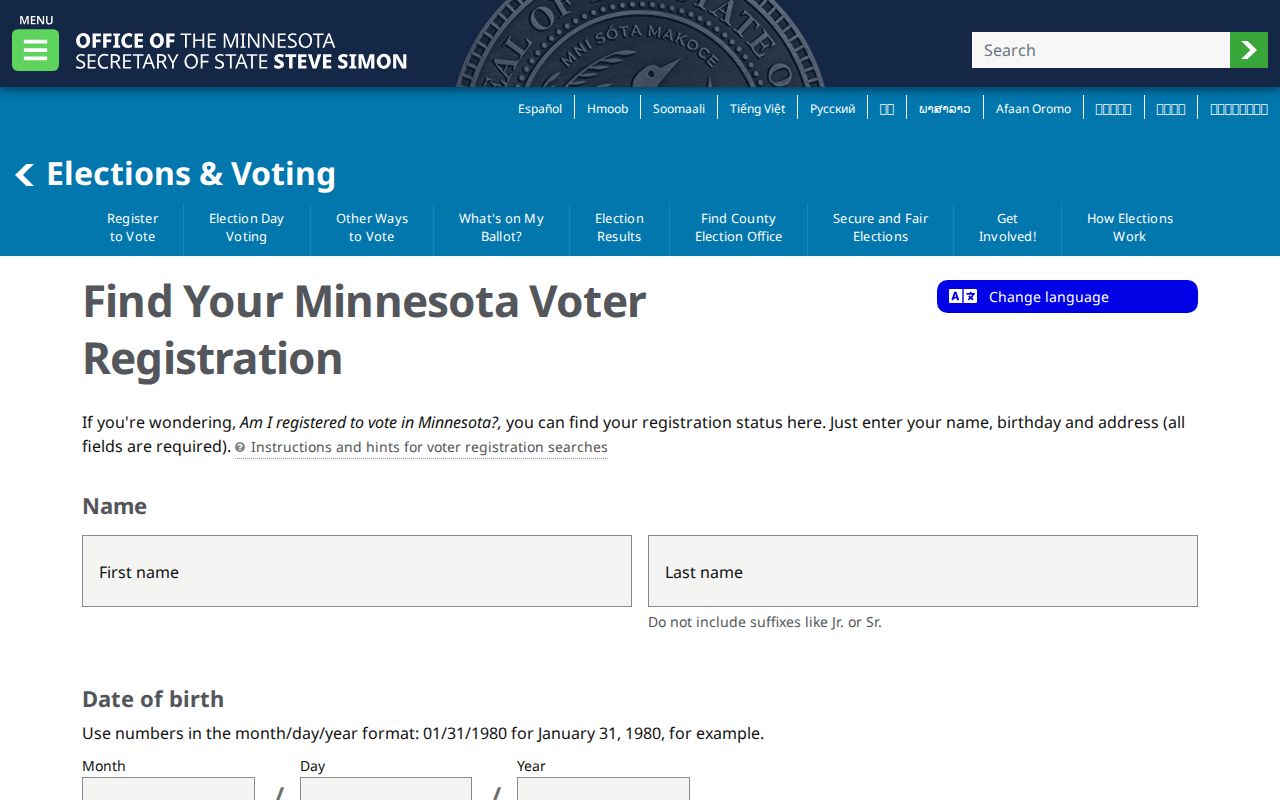
The form's address and unit fields explain why a full address is needed for an individual confirmation, while the rules prevent it from serving as an unrestricted resident list.
Minneapolis Vital Record Checks
Vital records can resolve a historical name collision, but access turns on the record type. The Minnesota Department of Health reports births beginning in 1900 and deaths beginning in 1908. The Minnesota Historical Society People Search covers births from 1900-1934, deaths from 1904-2001, and death verification from 1997 to the present. MDH does not issue marriage or divorce certificates or decrees. Marriage certificates are held by the county that issued them, and divorce decrees are held by the court.
Under Minn. Stat. §144.225, a birth record becomes public 100 years after birth. Public and certified access are not the same. Certified eligibility follows the statute and can require a listed relationship, authority, or other proof. Hennepin marriage records are indexed through MOMS, where the form provides county, applicant, name, date-range, Name Starts With, Name Sounds Like, and Name Exact Match controls. The Hennepin index begins in 1853, but it is an index and the county does not certify its accuracy.
For a county-held marriage document, Hennepin marriage records offers mail, drop-off, fax, in-person, and VitalChek routes. A certificate is $9, ordinary timing is about three weeks, faster service is about one week with a $20 fee, and in-person service is often same day. Treat the MOMS hit as a finding aid, then use the county's appropriate copy route.
Minneapolis Public Record Requests
When a needed public agency record is not in a search portal, use the Minneapolis public-data request route or the relevant Hennepin data-request channel. State the name, address, record type, department, date interval, desired fields, and preferred format. Ask for inspection first when cost matters. Under the Minnesota Government Data Practices Act, Minn. Stat. §13.03, agencies provide existing public data subject to classification. They do not have to create a new resident list or certify a conclusion that their records do not contain.
For a professional or business-record comparison, use License Minnesota or the Minnesota Secretary of State Business and Liens portal. License Minnesota offers a topic, agency, or A-Z path and a search field. The Secretary of State maintains business filings, assumed names, corporate records, UCC financing statements, and tax-lien-related searches. Match a legal entity, status, license number, city, and date. Do not treat a business, clinic, filing, or registered-agent address as a private residence.
The city describes its process in this Minneapolis public-data request source capture.
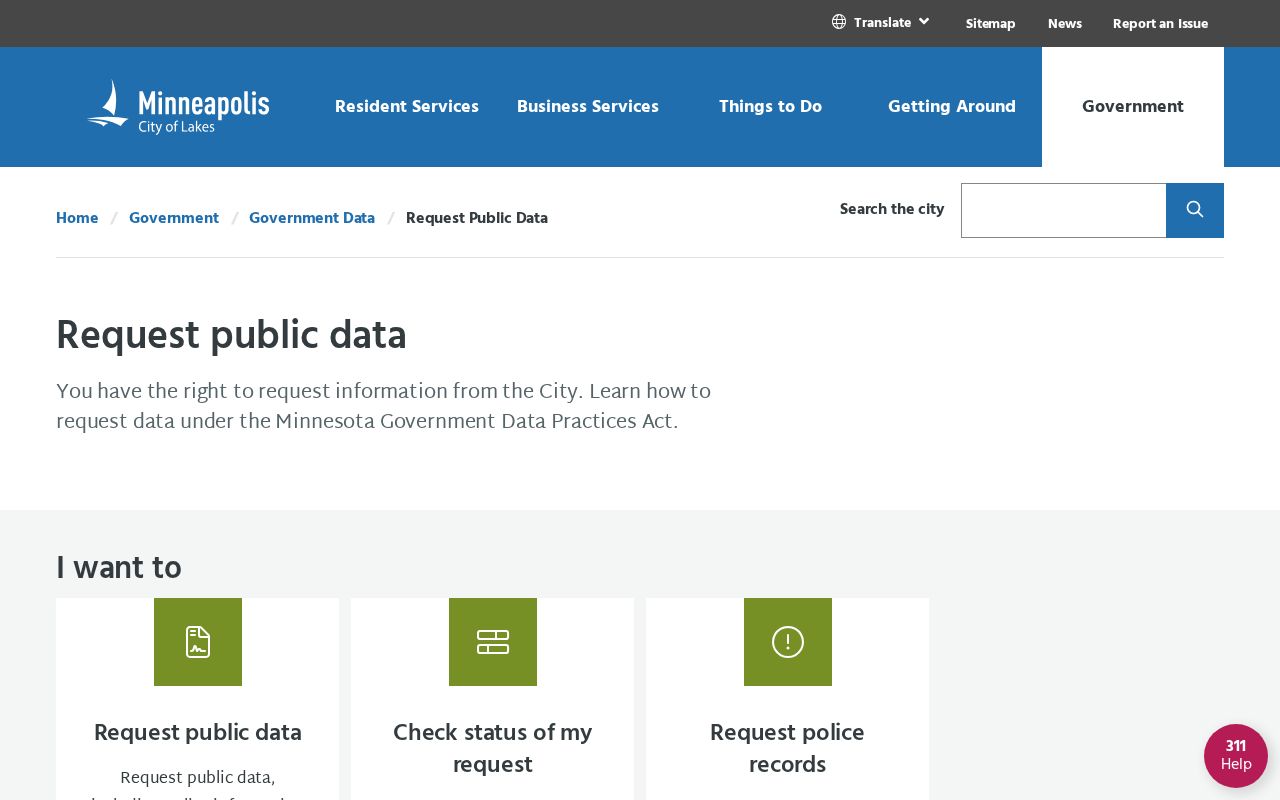
A narrow request makes it easier for the city to identify an existing public record and to explain any classification or copy-cost decision.
Note: Keep a request focused on records the agency already holds, including the department and date span, rather than asking it to assemble a new profile.
Minneapolis Resident Privacy Boundaries
Minnesota's Data Practices Act begins with a public-data presumption, but separate laws limit voter, birth, court, law-enforcement, and Safe at Home information. Public availability does not make every field available for unlimited reuse. Keep the source date and scope with a result, avoid republishing full dates of birth, phone numbers, email addresses, and safety-sensitive addresses, and honor an agency's required certification or terms. The Minnesota Consumer Data Privacy Act is distinct from a government-record request and does not erase public county or city records.
The Attorney General's February 5, 2026 privacy-law update says the Minnesota Consumer Data Privacy Act is fully effective and points consumers to a complaint route after a business fails to respond within 45 days. That consumer-data process is separate from a Minneapolis government-record request and does not supply a route around a records classification.
Lawful personal research. Treat each Minneapolis result as a dated record check, not a reason to expose a protected address or to harass anyone. Use the custodian's channel when a record is restricted or uncertain.
Minnesota Safe at Home serves people who fear for their safety, including survivors of domestic violence, sexual assault, and stalking. Participants receive a designated shared post-office-box address and mail forwarding. Do not publish or infer a participant's actual location from that designated address. MCRO also omits protected categories and fields, while voter-list access has its own statutory use limits. A missing result may reflect those boundaries rather than a failed search.